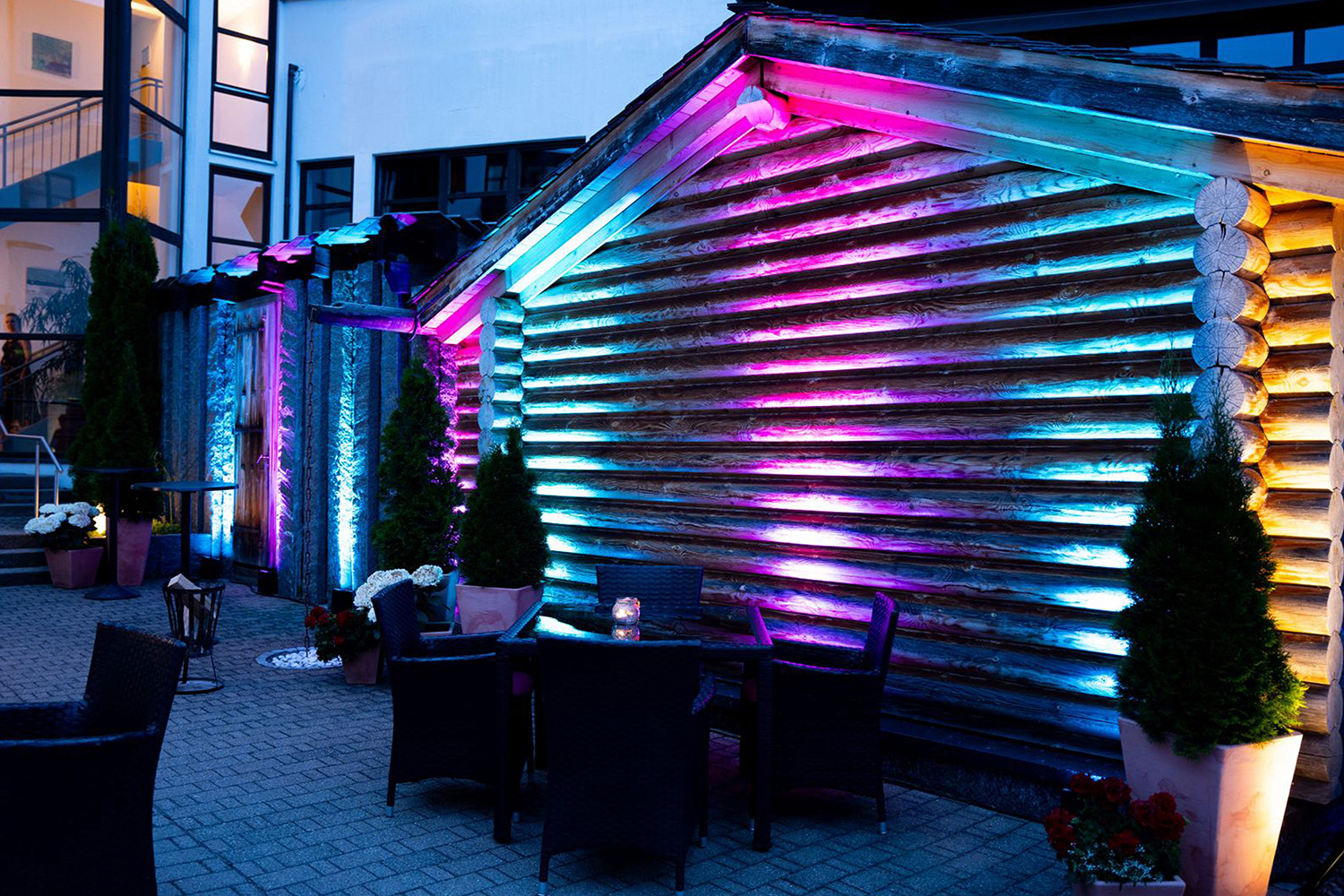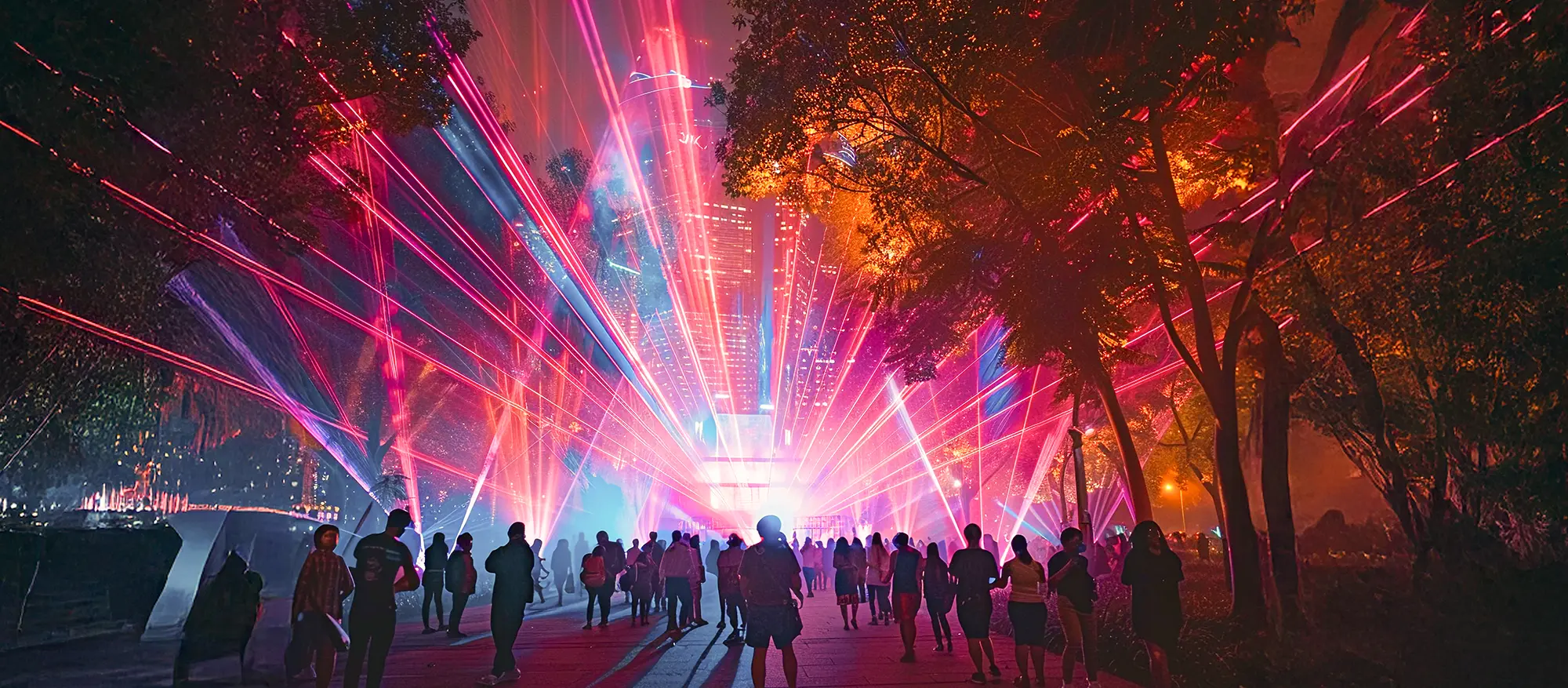
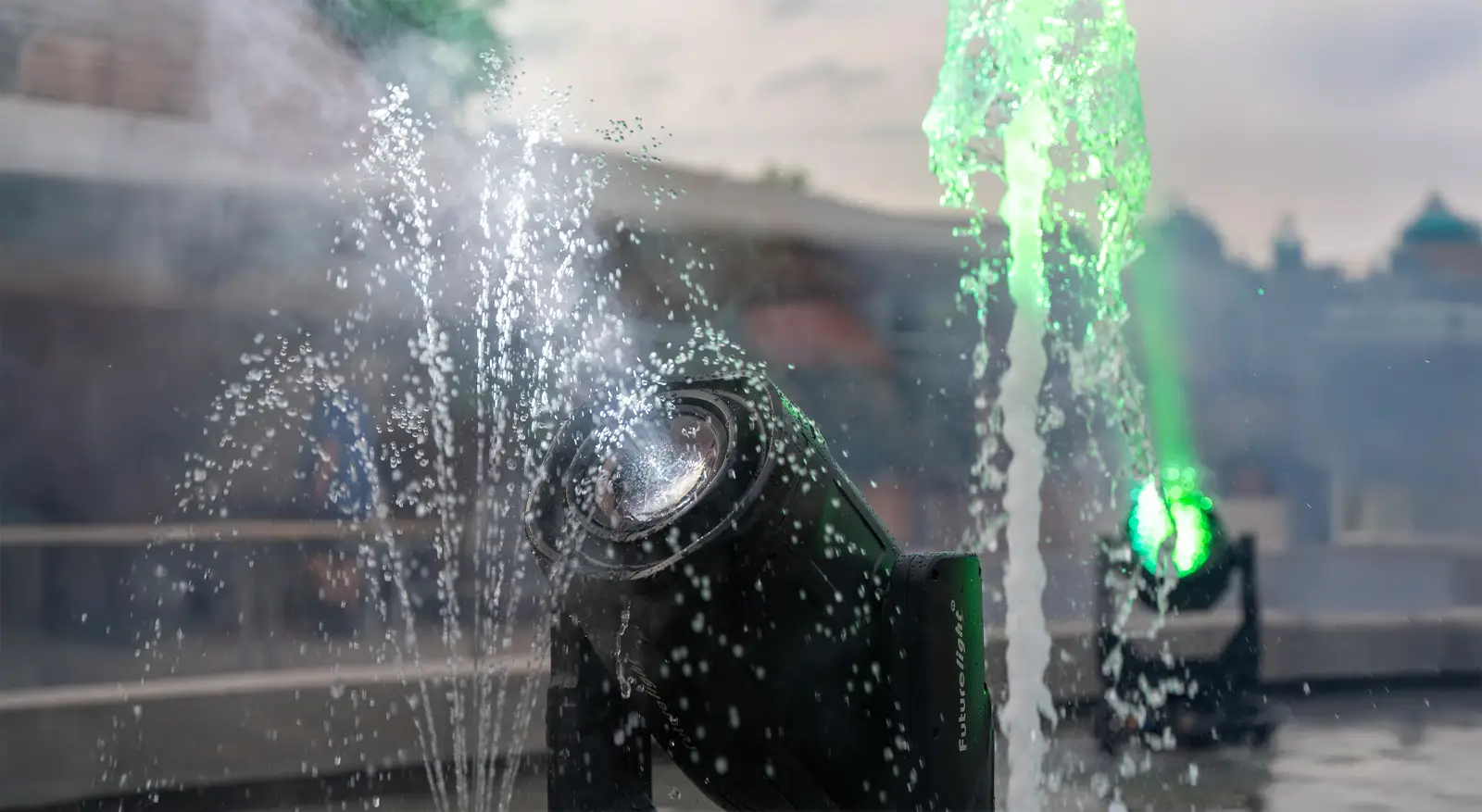
Outdoor moving heads are moving spotlights for outdoor use. They are used at festivals, city festivals, open-air concerts, architectural productions and temporary outdoor installations. The decisive factor is their protection rating: usually IP65. This indicates that the device is protected against dust and water jets, making it significantly better suited to changing weather conditions than a classic indoor moving head.
Contents
- 1. What are outdoor moving heads?
- 2. Why is IP65 important for outdoor events?
- 3. What advantages do weatherproof moving heads offer?
- 4. Beam, spot, wash: which version suits which application?
- 5. What should you look out for with outdoor moving heads?
- 6. Are weatherproof moving heads safe in all weather conditions?
- 7. Conclusion
- FAQ
1. What are outdoor moving heads?
Outdoor moving heads are motorized spotlights whose head can move horizontally and vertically. They create dynamic lighting images, moving beams, colored surfaces or structured projections. Unlike indoor devices, weatherproof moving heads have a protected housing, sealed connections and a design that is built for dust, moisture and changing outdoor temperatures.
An outdoor moving head is therefore not an ordinary moving head with an additional cover, but a specially developed device for more demanding operating conditions. The protection rating according to the IEC system describes how well a housing is protected against solid foreign objects and water. IP ratings are used internationally to make the degree of protection of electrical devices comparable.
2. Why is IP65 important for outdoor events?
The IP65 protection rating is particularly relevant for weatherproof moving heads. The first digit “6” stands for dust-tightness. The second digit “5” stands for protection against water jets. For outdoor events, this means: an IP65 device is significantly better protected against rain, dust and typical open-air conditions than an indoor spotlight without the corresponding protection rating.
However, IP65 does not mean that a device may be exposed to every weather condition without limitation. Heavy rain, storms, lightning, standing water or unsuitable connection cables can still pose risks. Weatherproof moving heads are therefore part of a professional outdoor concept, but they do not replace safe planning, professional power distribution or weather monitoring.
3. What advantages do weatherproof moving heads offer?
Weatherproof moving heads increase planning reliability for open-air productions. They reduce the risk of moisture, dust or changing temperatures affecting the lighting technology. This makes it possible to implement moving lighting designs even in places where normal indoor devices should only be used with restrictions or not at all.
For lighting designers, this creates an important creative advantage: beams, washes, gobos, prisms and color changes can also be used flexibly outdoors. This allows stages, façades, audience areas and event spaces to be staged more dynamically. Especially at festivals, corporate events, city festivals and temporary outdoor locations, weatherproof moving lights can significantly enhance the visual wow effect.
4. Beam, spot, wash: which version suits which application?
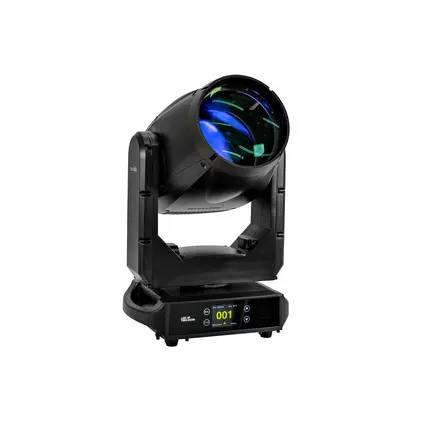
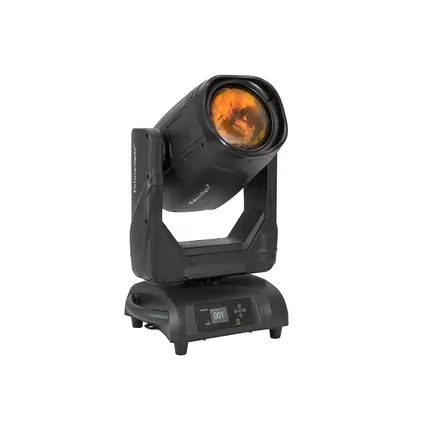
Beam moving heads create tightly focused, intense light beams. They are particularly suitable for clearly visible light cones over stages, audience areas or open-air spaces. One example is the EUROLITE LED IP TMH-B250 Moving-Head Beam. It has an IP65 protection rating, a 250 W LED, a narrow beam angle of 1°, a gobo wheel with 13 gobos and two combinable rotating prisms.
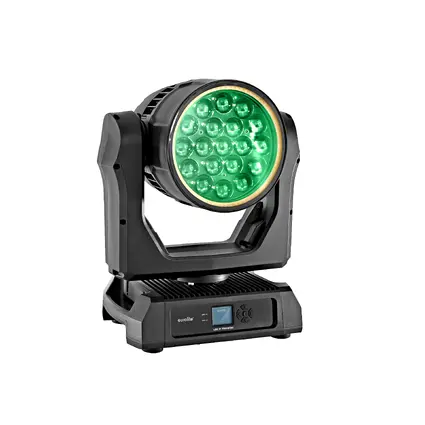
Wash moving heads are designed for colored surfaces and broad illumination. They are used when stages, sets, architecture or decorations need to be evenly illuminated in color. The EUROLITE LED IP TMH-W285 Hypno Moving-Head Wash is a weatherproof moving washlight with RGBW LEDs, background illumination via RGB Hypno LEDs and zoom. The IP65 version is designed for rain, dust and changing weather conditions.
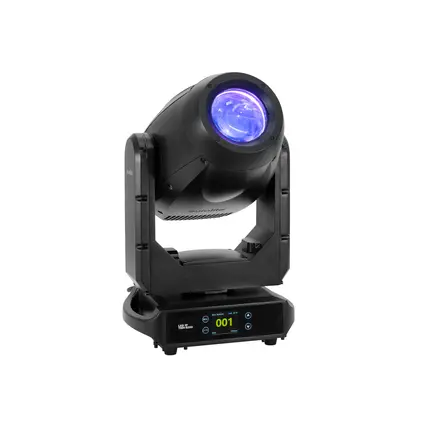
Hybrid or BSW moving heads combine several functions in one device. BSW stands for beam, spot and wash. Such devices make sense when different lighting tasks in a production need to be solved with as few device types as possible. The EUROLITE LED IP TMH-S250 is such an all-rounder: a weatherproof beam/spot/wash moving head with IP65, 250 W LED, zoom, two gobo wheels and prism.
For particularly far-reaching beam effects, powerful devices with a narrow beam angle are an option. The FUTURELIGHT IP PLB-420 is such a weatherproof beam moving head with IP65, 420 W discharge lamp, CRMX wireless receiver and very narrow 1° beam. These devices are interesting for large stages, festivals and professional outdoor productions.
5. What should you look out for with outdoor moving heads?
With outdoor moving heads, the appropriate protection rating should be checked first. For outdoor use, IP65 is often a practical choice because it offers protection against dust and water jets. In addition, the manufacturer’s specifications regarding installation, operating position, ambient temperature, power supply and maintenance must be observed.
Weatherproof devices also require weatherproof connection solutions. An IP65 moving head loses its practical benefit if power or data cables are not suitable for outdoor use. For this reason, power distribution, DMX or wireless control, connectors, strain relief and cable routing should always be planned together.
Positioning is also important. Outdoor moving heads should be mounted securely and protected against unintentional loosening. They should not be operated in standing water and must be positioned so that heat dissipation, range of movement and maintenance access remain ensured.
After use, weatherproof moving heads should be inspected and cleaned. Dust, pollen, mud, moisture and residues can accumulate on housings, lenses, ventilation paths and connections. Regular care improves reliability and extends the service life of the devices.
6. Are weatherproof moving heads safe in all weather conditions?
Weatherproof moving heads are built for more demanding outdoor conditions, but they do not automatically make an event independent of the weather. In storms, thunderstorms, lightning risk or extreme weather situations, technical systems, temporary structures and visitor areas must be assessed together. Outdoor lighting technology is always part of an overarching safety concept.
For event organizers, this means: the IP protection rating is important, but it is not the only factor. Weather monitoring, emergency planning, safe power supply, professional installation and clear responsibilities during the event are also crucial.
7. Conclusion
Outdoor moving heads enable professional lighting design in the open air. They combine moving lighting technology with a weatherproof housing, creating greater safety, flexibility and creative possibilities for open-air events. IP65 devices in particular are suitable for many outdoor applications, provided they are properly planned, connected, mounted and maintained.
Anyone choosing weatherproof moving heads should not only pay attention to brightness and effects. Important criteria include protection rating, device type, connection concept, lighting task, installation location and maintenance effort. Only the interaction of these factors ensures that outdoor lighting technology functions reliably and that events can be staged with strong visual impact.
FAQ
IP65 means that the housing is dust-tight and protected against water jets. For outdoor moving heads, this protection rating is particularly relevant because it makes use in rain, dust and changing weather conditions easier.
Indoor moving heads are usually not designed for moisture, rain or heavy dust. For open-air events, weatherproof devices with a suitable IP protection rating should therefore be used.
Depending on the lighting design, beam, wash or hybrid moving heads with IP65 protection are suitable for festivals. Beam devices create visible light beams, wash devices illuminate large areas, and hybrid devices combine several functions.
IP65 means protection against dust and water jets, but not automatically protection against permanent submersion or extreme weather conditions. The manufacturer’s specifications and the conditions of use must always be observed.